






TRIGLICERIDI

Trigliceridi,

Hiperlipidemija (povećan broj lipida u krvi) spada u dislipidemije i označava porast ukupnog holesterola i/ili triglicerida sa niskim vrednostima HDL (“dobrog” holesterola) u plazmi. To doprinosi bržem nastanku ateroskleroze. Hiperlipidemija je sama za sebe asimptomatska, ali može da vodi simptomatskim vaskularnim oboljenjima.
Niz epidemioloških ili opservacionih studija pokazao je da je hipertrigliceridemija (povećano stanje triglicerida u krvi) ujutru pre obroka ili nakon obroka uzročni faktor rizika od kardiovaskularnih bolesti (1,2). Teška hipertrigliceridemija uglavnom sadrži hilomikrone (oni prenose trigliceride od creva do jetre, mišićnog tkiva i masnog tkiva) koji dovodi do zapaljenja pankreasa (pankreatitisa) (3).
Multietničko istraživanje ateroskleroze 2015. objavilo je izveštaj o lipoproteinima i incidenci dijabetesa tipa 2. U ovoj grupi, sa etnički raznolikim muškarcima i ženama, indeks rezistencije na insulin, visok VLDL (“loš” holesterol), odnos triglicerida i triglicerida prema HDL povezani su sa incidentnim dijabetesom (4).
U novijem istraživanju (2018.) otkriveno je da trigliceridi blokiraju sposobnost leptina (hormon regulacije apetita) ili insulina da aktiviraju svoje signalne puteve. Dokazano je da trigliceridi brzo prelaze krvno-moždanu barijeru, takodje da se nalaze u cerebrospinalnoj tečnosti čoveka i indukuju centralni otpor leptina i receptora insulina, smanjujući sitost i kogniciju (5).
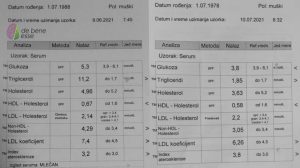
Gledajući gotovo nestvarnu korekciju (trigliceridi 11,2 -> 1,85) za tako kratak vremenski period (4 nedelje), uticalo se kao što vidite na mnogo aspekata zdravlja, preko samo jednog faktora – triglicerida. Nekako najvažniji je osećaj konstantne sitosti i mogućnosti za lakše funkcionisanje kognitivnih sposobnosti – mišljenje, učenje, pamćenje…! 😊
 
1. Johansen CT, Hegele RA. Using Mendelian randomization to determine causative factors in cardiovascular disease. J Intern Med. 2013 Jan; 273(1):44-7.
2. Jørgensen AB, Frikke-Schmidt R, West AS, Grande P, Nordestgaard BG, Tybjærg-Hansen A. Genetically elevated non-fasting triglycerides and calculated remnant cholesterol as causal risk factors for myocardial infarction. Eur Heart J. 2013 Jun; 34(24):1826-33.
3. Brunzell JD, Schrott HG. The interaction of familial and secondary causes of hypertriglyceridemia: role in pancreatitis. J Clin Lipidol. 2012 Sep-Oct; 6(5):409-12.
4. Mackey RH, Mora S, Bertoni AG,et al.Lipoprotein particles and incident type2 diabetes in the multiethnic study of atherosclerosis. Diabetes Care 2015;38:628–636.
5. Banks, W. A., Farr, S. A., Salameh, T. S., Niehoff, M. L., Rhea, E. M., Morley, J. E., … Craft, S. (2017). Triglycerides cross the blood–brain barrier and induce central leptin and insulin receptor resistance. International Journal of Obesity, 42(3), 391–397.

All of the information on this website—debeneesse.org—is published for general information and educational purposes only. Debeneesse.org does not make any guarantees about the completeness, reliability, and accuracy of this information. This information is not intended to treat or cure any medical conditions, provide medical advice, or take the place of your physician’s advice. All viewers/readers of this site and content are advised to consult a qualified health professional regarding health questions and concerns. The dietary and other substances, and/or materials, equipment or devices discussed on this site may not have undergone evaluation and/or testing by the United States Food and Drug Administration or like agency of any other country. Risks that might be determined by such testing are unknown. Any action you take upon the information that you find within this content is strictly at your own risk. Neither Deni Katanic nor any content publishers will be liable for any damages or losses in connection with the content on this website. All viewers should consult their physicians before starting any lifestyle, supplement, or nutrition program.

©2022. De Bene Esse. All Rights Reserved.